London,
for the long run.

Habitat London / 5 Min /  Gary Cadogan↗
texture of inspiration
London has been Gary's place for over twenty years. He has directed campaigns for Givenchy, Swarovski, and Beyoncé x H&M, and led brand work in-house at Made.com. During the pandemic, he and a friend started making shoes for their kids. That became Dubs, a children's footwear brand. We met at AKQA over a decade ago. He has been part of TFO since the beginning.

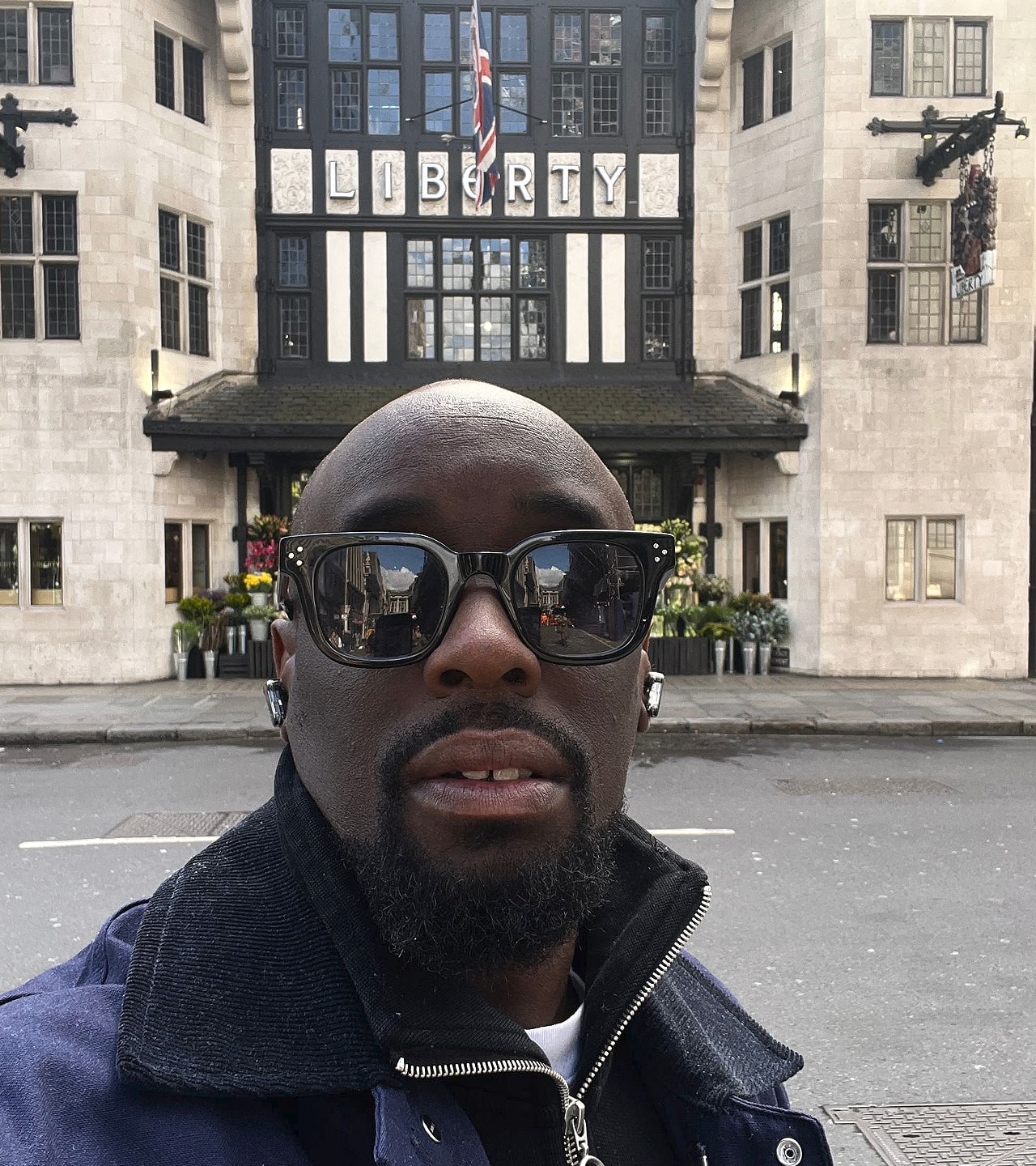
London is shouting at you. It does this all the time, everywhere, to anyone who will listen. On the tube platform, on the corner where three things catch your eye before you've named any of them, at the lunch place where the person ahead of you in the queue is wearing something you've never seen before and probably won't see again. Gary Cadogan has lived in this city long enough to know that the shouting is the point.

"You don't have to do much to drink it in," he says. "London is just that kind of place."

He found this out properly only when the city went quiet. Lockdown was the rupture. Not Brexit, which rearranged some paperwork but left the essential texture of London intact. What disappeared wasn't the commute or the meetings. It was the unconscious input: the overheard conversation, the energy of rooms full of people who aren't you, the data you collect without knowing you're collecting it. "You lost data you didn't realise you were even getting," he says. "And then it was like, oh, I feel a little bit less inspired." He has been more deliberate ever since. He goes in a few times a week, makes himself be around people and creative spaces, treats proximity to others as infrastructure rather than option.

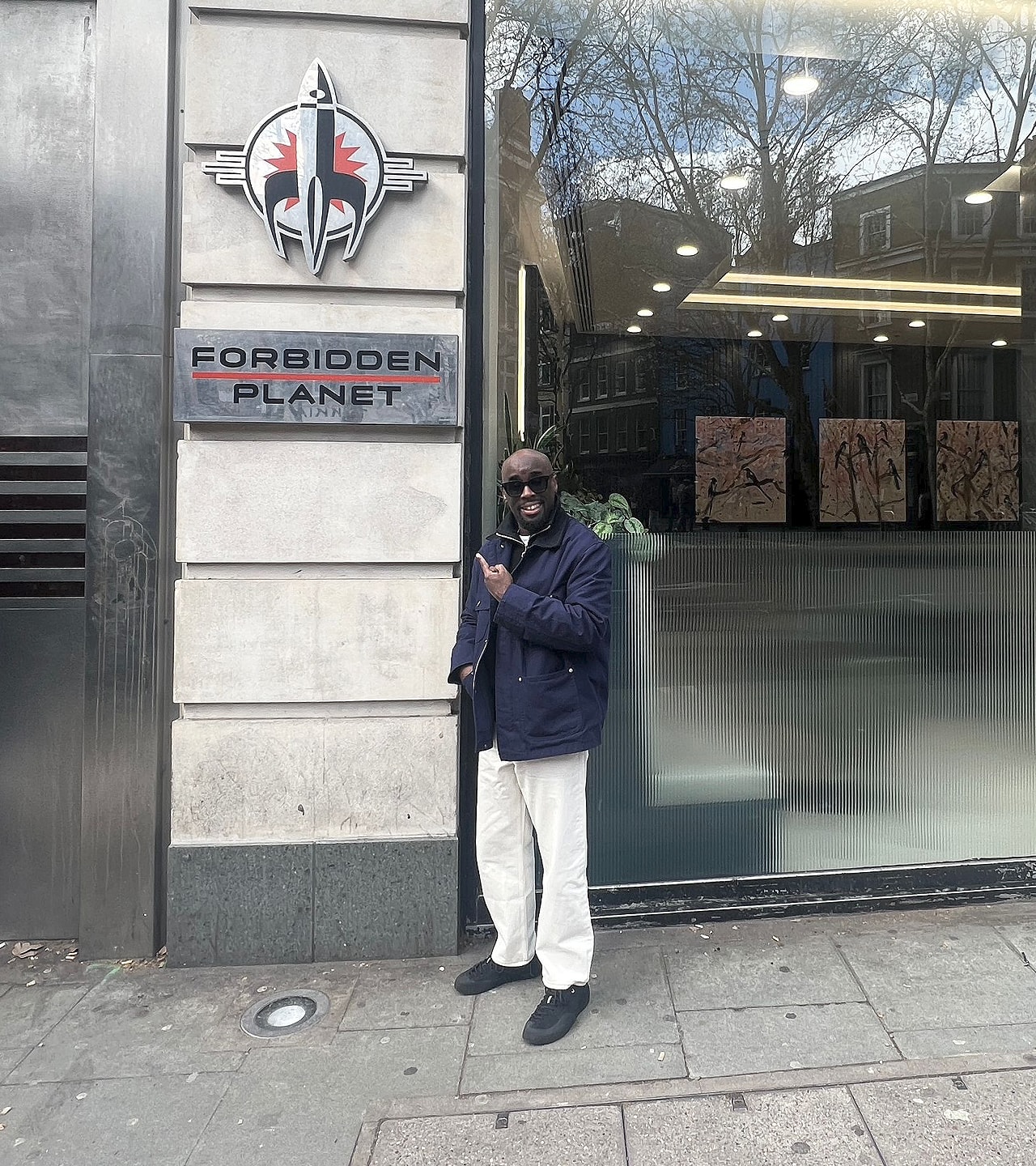
We met in London, early 2013, and stayed in touch in the way that good creative friendships tend to: sporadically, warmly, picking up more or less where we left off. When I visit, he says, we're going east. St. John's first, the one thing that hasn't changed, the fixed point, and then an afternoon walking through Shoreditch, up through Dalston, towards Hackney. The neighbourhood is unrecognisable from the years when both of us spent time there; three things have opened and closed in every single premises. But the walkability is still there. You get off the tube and then you just go, one street leading to the next, and the city provides. It has a New York quality, he says. The kind of place where you don't need an itinerary, just a direction.

Gary was part of the team at AKQA that made that office feel like somewhere worth being. The kind of person who doesn't announce his presence but ends up at the centre of whatever is happening creatively. Ten-odd years later, both of us have moved through several chapters each. He stayed in London. The city got his loyalty, and it keeps paying him back.
Shifting gears
The quality of mild unreality.
Gary grew up in a family where going to university wasn't the expected path. His mother lives in Reading. He and his brother spent a significant portion of their early lives inside Marvel and DC comics, and Gary's ambition during those years was not vague. He wanted to draw panels for a living. The big splash page, the quiet conversation panel after it, the specific craft of constructing a page so that it breathes. Nobody told him that graphic design existed as a profession.

"Kids know what that is now," he says. "But we didn't. I didn't realise this was a thing."

He found it at Kent Institute of Art and Design, and from there the career took a shape that becomes logical only in retrospect. GQ first, as a designer and then associate art editor, at a time when the magazine operated at a level where you shot with real fashion photographers and the aesthetic was genuinely premium. Then Arena, Men's Health, Wired. Editorial was a design education at speed: twenty pages to the printer every week. Concepting Monday, shooting Thursday, laid out and done by the weekend. The clock was real and the output was constant and it turned out to be an extraordinary training ground.

The move into agencies required a gear change he hadn't fully anticipated. Spring Studios first, then Wednesday London, then eventually AKQA and RGA. Walking into a large agency after years in editorial had a quality of mild unreality. The timelines were different, the cast of characters was different, and there were job titles he hadn't encountered before. What he came to understand, once he'd found his footing, was that the underlying thinking wasn't different at all. Strategy had a new name for something he'd been doing throughout. Art direction had more rigmarole around it but the same core questions. The skills he'd built in magazines transferred, reliably, into every context he moved through. He worked this out fully when friends who had stayed in editorial asked him how to make the jump. He'd tell them: just go. "They call it something different. But what you've been doing, they more or less have different names for it." Each move after that got a little less frightening. The learning curve stayed. The existential uncertainty mostly didn't.

Made.com was the synthesis: the strategic weight of agencies, the output pace of brand work, the tangibility of a product that goes out and actually sells things. He was Creative Director, built a team, developed the Never Ordinary campaign. But what he talks about most from that period isn't the work itself. It's the team. The young ones who came in raw and enthusiastic, who he'd bring to shoots and stand further back from each time until they were out front and he was on the sofa watching them grow into it. He's not interested in protecting knowledge. "If we're not all winning, we're not winning," he says, and means it in both directions: the bad energy at the top that kills creative work, and the joy of a team that's really cooking.

This is, in some ways, what makes Gary such a consistent collaborator. Over the years he's moved through TFO projects in different constellations, different teams, different challenges. The through line is always the same: he finds his place, does his part with real accountability, and quietly makes the people around him better. He doesn't muddy the edges. He knows what he's doing and he does it, and if a project is good, he's genuinely happy about that, regardless of whose name is on which part.
DUBS Production
"It's allowed my ambitions to match my reality."

In 2020, during the first lockdown, Gary and his longtime friend Stuart Davis started a children's shoe brand. The origin was practical and slightly exasperating: Stuart's daughter Leila kept growing out of her shoes after two or three wears, and the shoes kept going in the bin. Gary, who had spent years working with fashion and lifestyle brands, understood the problem immediately. What neither of them had was any experience in the footwear industry. What they did have was a clarity about what they wanted to make: shoes built to be passed on, sized to grow with a child, made from recycled materials, designed to last long enough to be worn by more than one kid.

Dubs launched without external capital, without industry connections, built through skill-swaps and a Kickstarter and a considerable amount of figuring things out as they went. It has since won awards, partnered with Sal's Shoes on resale, and started a sustainability research collaboration with London South Bank University. What Gary talks about when he talks about Dubs is the gap between what you imagine and what you can actually do, and how that gap changes. "Your dreams versus the reality of what you can do," he says. Before, in his brand and agency work, there was always a budget, always someone else handling the parts he didn't need to think about. Building something of his own meant suddenly doing all of it, and wanting it to look like the other thing. AI has helped close that distance. He doesn't love everything about how it arrived in the culture, but when he's actually using it, learning it, getting results that would have been impossible otherwise, there is something that feels close to relief. "It's allowed my ambitions to match my reality," he says.
The comics never entirely left. They went underground and became structural.

They show up in how Gary thinks about pace, not as tempo but as rhythm, the loud moment and the quiet one after it, the way a sequence builds and earns its release. They show up in his ongoing negotiation with minimalism. He has learned it, genuinely values it, works from it. But it costs him something every time. His instinct runs the other direction, towards scale and drama and perspective, towards making things bigger and more present. "It is a constant battle within me," he says. "Do less. That's the thing." A layout starts loud, goes quiet, comes back, and somewhere in the middle of that back-and-forth is the thing that actually goes out.

His phone home screen is completely white. No apps, no widgets, nothing, just white, with a charge indicator. Maximum restraint. It's so minimal it takes a second to clock as a deliberate decision rather than an oversight. Then he shows you the other one, the phone he had before: Magneto, in full Marvel authority, rendered in the kind of line work that makes him visibly happy the moment he pulls it up. The two screens. The battle continues, and both sides are winning.

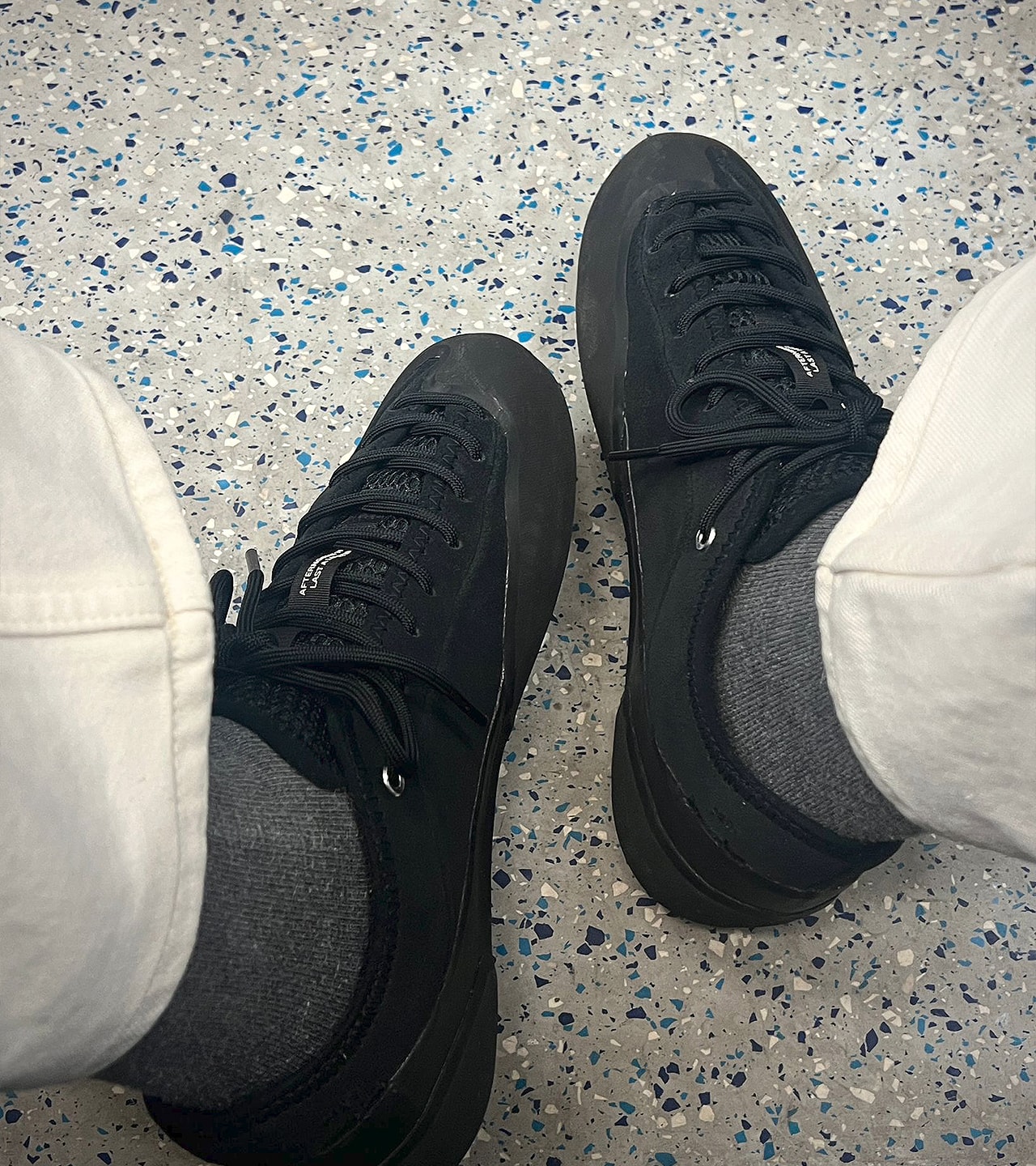
He has a pair of Village skate shoes he bought off an Instagram recommendation and can't quite justify. He knows perfectly well he is not a skater. He also knows that any actual skater who recognises the shoes will see through him immediately, but he liked the utilitarian nature of them, a product created to do one thing well. His Instagram is now feeding him professional skate videos of people doing things that are physically implausible. He watches them with the specific admiration of someone who understands, from a lifetime of looking at how things are made, exactly how much is happening in each frame.

AI is the first thing in years that has genuinely surprised him. Not the conversation around it, which he found mostly noise. The moment of actually learning it, of getting something you wanted from it, of feeling a new skill open up. He has lived through enough eras, print, digital, mobile, social, now this, to know the difference between a shift that redecorates and one that restructures. This one restructures. For a creative director who has spent twenty years knowing what every tool can do, encountering something whose limits aren't yet mapped has a particular quality. He's not fully at peace with it. But he's in it, and he finds it genuinely exciting, and that, at this point in a long career, is something worth paying attention to.
Habitat: London
Gary Cadogan

Images by Gary Cadogan
Conversation by Mario, TFO